


The District of Columbia is such a unique place. Not because it is my home, which alone makes it special, but mostly because of the bonkers concept behind its creation and the insistence that it continue as is.
When the United States declared itself independent from its British overlords, it was decided that Philadelphia would serve as its capital. Makes sense. But then we freaked out because our British overlords were the most dominant military and Navy in the world at the time, and could get to Philly relatively easily and take the place. So in December 1776, we moved the capital to Baltimore, Maryland. Thus began a saga that led us to the current capital, Washington, DC.
Realizing that Baltimore wasn’t the best choice, the return to Philadelphia was made. But then we freaked out again. So we then moved our capital to Lancaster, Pennsylvania, for a day, like it was a pop-up bar on tour. Then our capital was moved to Annapolis, Maryland, which isn’t Baltimore; then Trenton, New Jersey; then York, Pennsylvania; then Philadelphia; then Princeton, New Jersey; and finally New York City. I think we had around nine capital cities before we figured out that moving around like a recent college graduate with a degree in theater wasn’t the best idea.
But ultimately, our main man, Alexander Hamilton, along with guys like Thomas Jefferson, led efforts to compromise and move the capital to a newly created federal city at the confluence of the Potomac and Anacostia Rivers. Maryland and Virginia would cede land to this newly created place, which would eventually be called the District of Columbia, named after Christopher Columbia.
For centuries, the District served as the governing hub of the ever-growing world power that the United States would eventually become. One silly reason for creating Washington, DC, rather than a place within a state, was the idea that the federal government wouldn’t be subject to local interests. I never understood this argument. What local reasons would usurp the interests of an entire nation? Eating more crab cakes or something?
Despite gaining Home Rule many years later, which allowed us to vote for a Mayor and the City Council, there is still no local pressure on the federal government. In fact, it’s just the opposite. All of our laws would depend on people in Congress deciding how we should govern ourselves. It’s the most un-American concept ever.
But this week, we celebrate a minor achievement: the 23rd Amendment was ratified on March 29, 1961, giving the residents of Washington, DC, the right to vote for the president of the United States. Back in 2023, when I ranked the amendments to the Constitution, the 23rd sat just outside the top ten.
We will elect a mayor in 2026. Our current mayor, thankfully, announced she would not seek a fourth term. Just the fact that she could run for a fourth term is nuts. In case you are wondering, I’m not a fan of Mayor Muriel Bowser, for a variety of reasons, but mostly because of her opposition to the revised criminal code debate, in which she flipped her initial support of the decades-long process to revamp and update everything, and for whatever reason, opposed it. This action provided an opening for Congressional Republicans to hammer the city for the way it prosecutes crimes. Her alliance with the GOP was so successful that President Joe Biden signed a bill overriding the passed reforms. We still have the same system in place since it was passed in 1901. We continue to do patchwork, while our judicial system remains woefully under-resourced with important stuff – like judges. Only Congress can fix that.
But that is our lot in life here in Washington, DC. We must not have representation because we weren’t created with that in mind. We were also created with the idea that enslaved people would live here, but whatever! No senators or congresspeople for us.
Happy Anniversary of that reminder!
Okay, let’s highlight what else happened this week. As a reminder, these events mark their anniversary, ending in 5 or 0. Here’s what I got:
1. A fire at the Triangle Shirtwaist Co. in New York City killed 145 workers. March 25, 1911. The factory in Greenwich Village that made women’s blouses was staffed by immigrant women, whom the owners figured would be less likely to unionize and would work up to 70 hours a week, including Saturdays, earning about $3 an hour. A fire began on the 8th floor, most likely from a cigarette, and quickly consumed the company’s three floors, which were the remaining floors of the building and killed 145 workers. It would have been much more, but the fire happened at the end of a Saturday workday, and many brave people worked to save many lives. It is still considered one of the worst workplace disasters in American history and just another highlight of how we treat labor.
2. President Andrew Johnson vetoed a civil rights bill on March 27, 1866. The low-ranked president vetoed the first federally protected civil rights of newly freed enslaved black people, mostly because of “states’ rights,” but also because he felt the “market” would eventually figure everything out, and we didn’t need to pass federal laws. This action would eventually lead to an enormously complicated 14th Amendment, which allowed for massive incarceration injustice to the ancestors of those enslaved people. Of course, the current administration wants to remove the citizenship part of this amendment, and if successful, would probably try to get us to revert to slavery.
3. Julius and Ethel Rosenberg were found guilty of passing atomic secrets to the Russians on March 29, 1951. Julius Rosenberg worked as a civilian engineering inspector for the army and passed along vital information to the Russians concerning how the United States built its fighter planes, used radar and other secret stuff. It was discovered that Rosenberg was a member of the Communist Party of the USA, which seems like it would have been discovered sooner in the application process. His wife joined him in his treasonous activities, and they eventually recruited his brother-in-law, who worked on the Manhattan Project, which was the first nuclear weapon development program. The entire family affair resulted in everyone eventually being caught, tried, convicted, and sentenced to death.
I promised you last week that I’d share the three books I read while on vacation. Let’s get after it.
1. To Show and To Tell (Phillip Lopate)
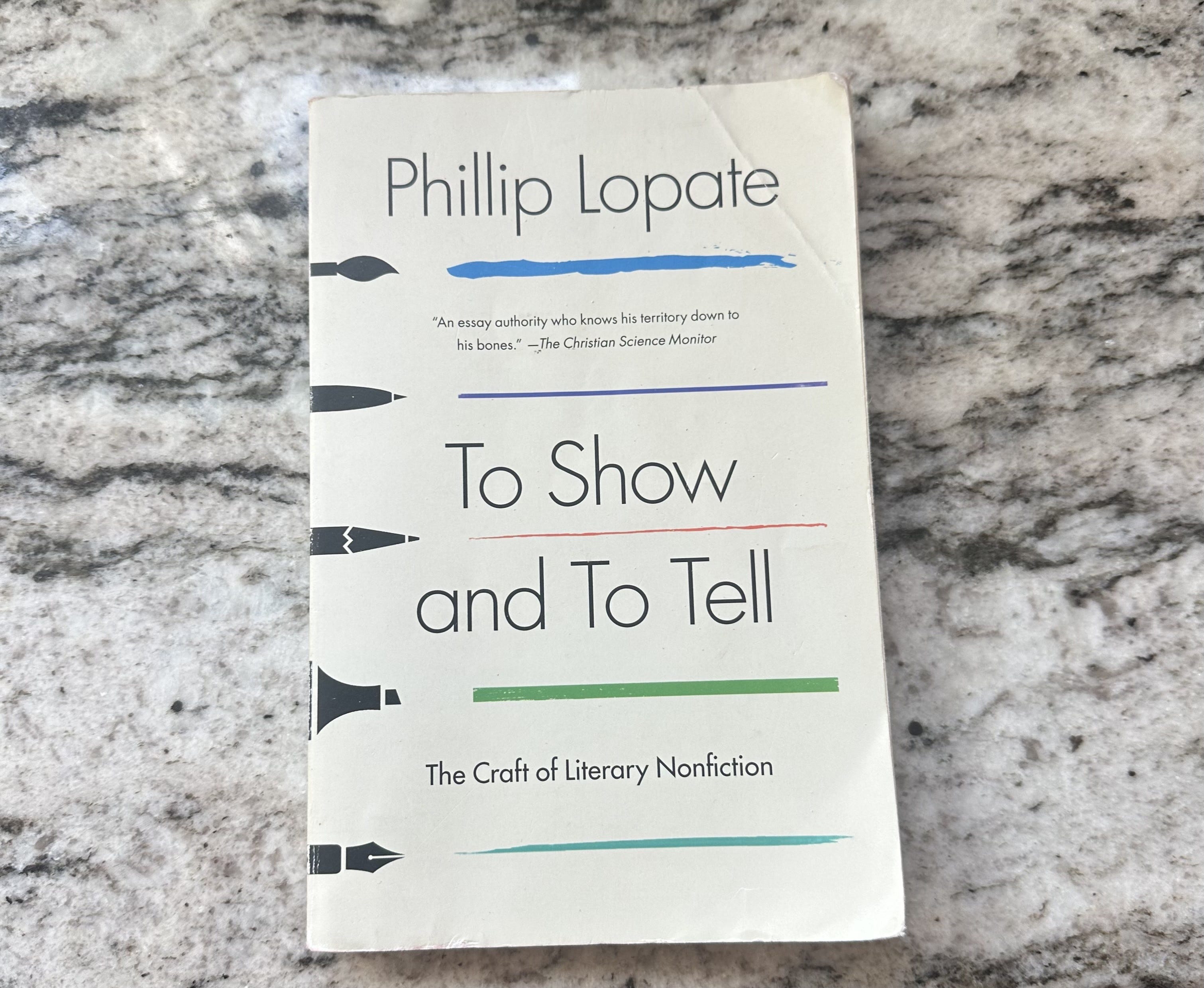
This book needed to be finished on the trip because I started it over a month ago. It explores what it means to excel at the craft of literary nonfiction. Lopate is a well-known and respected essayist who has an obnoxiously large vocabulary. It took me forever to read this book, despite its short length, because it was another book where I spent a lot of time looking up definitions. The end is spent discussing his favorite essayists, which, I felt, dragged the book down. He does provide a laundry list of essays to read, which I really need to do.
2. Orbital (Samantha Harvey)
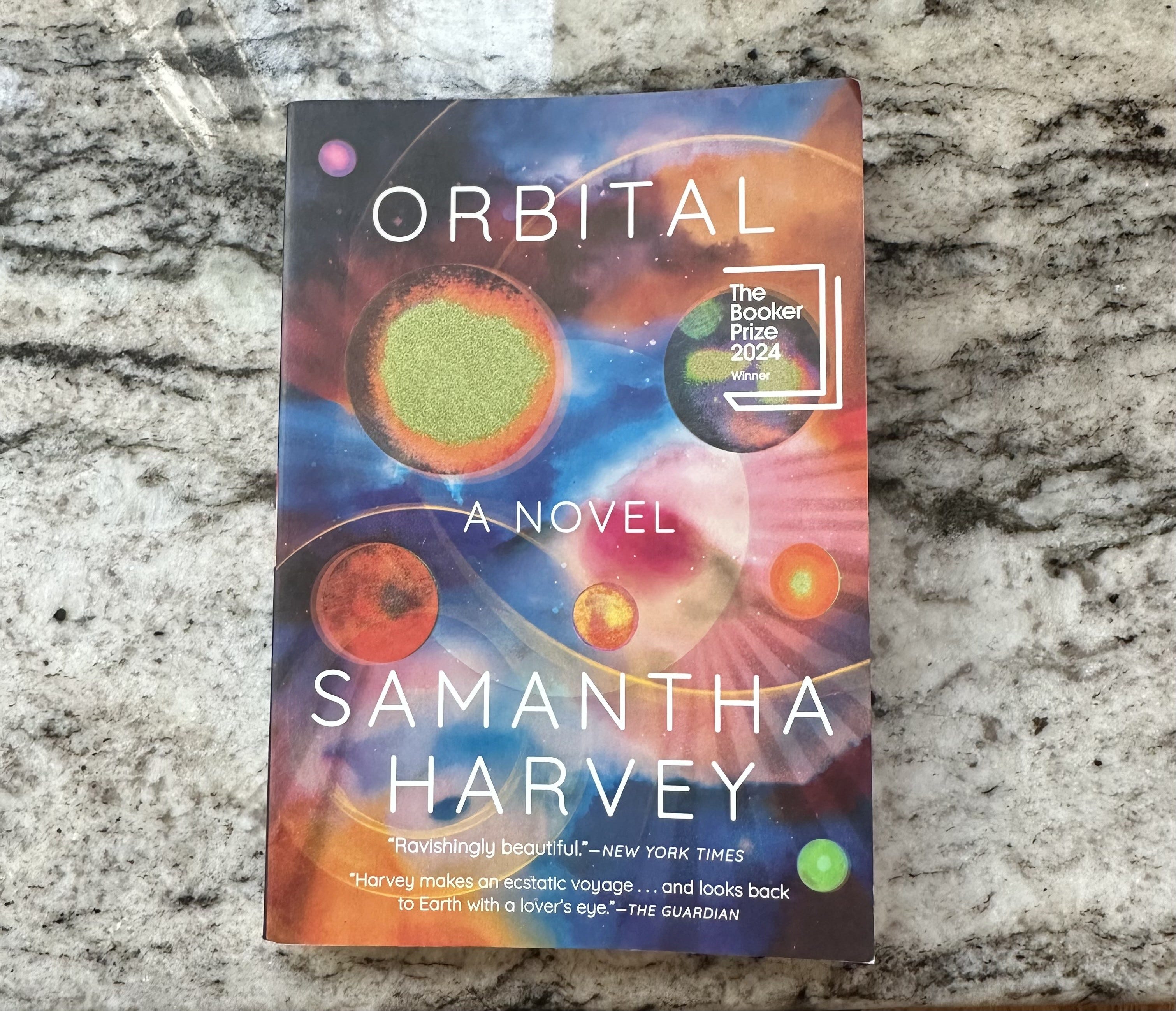
The first of two space books that Anonymous recommended to me. Fortunately, we own both, which means the books I keep purchasing will take up shelf space while I go through the ones I bought a while ago that have been sitting there. This is a tremendous book, an exploration of what it feels like to orbit Earth with six astronauts and cosmonauts. The pacing of this book puts you into a trance that you don’t ever want to put down. It’s another short book; I finished it in two days rather than one, because I enjoy going into the water. I didn’t have to look up so many words in this one.
3. Project Hail Mary (Andy Weir)
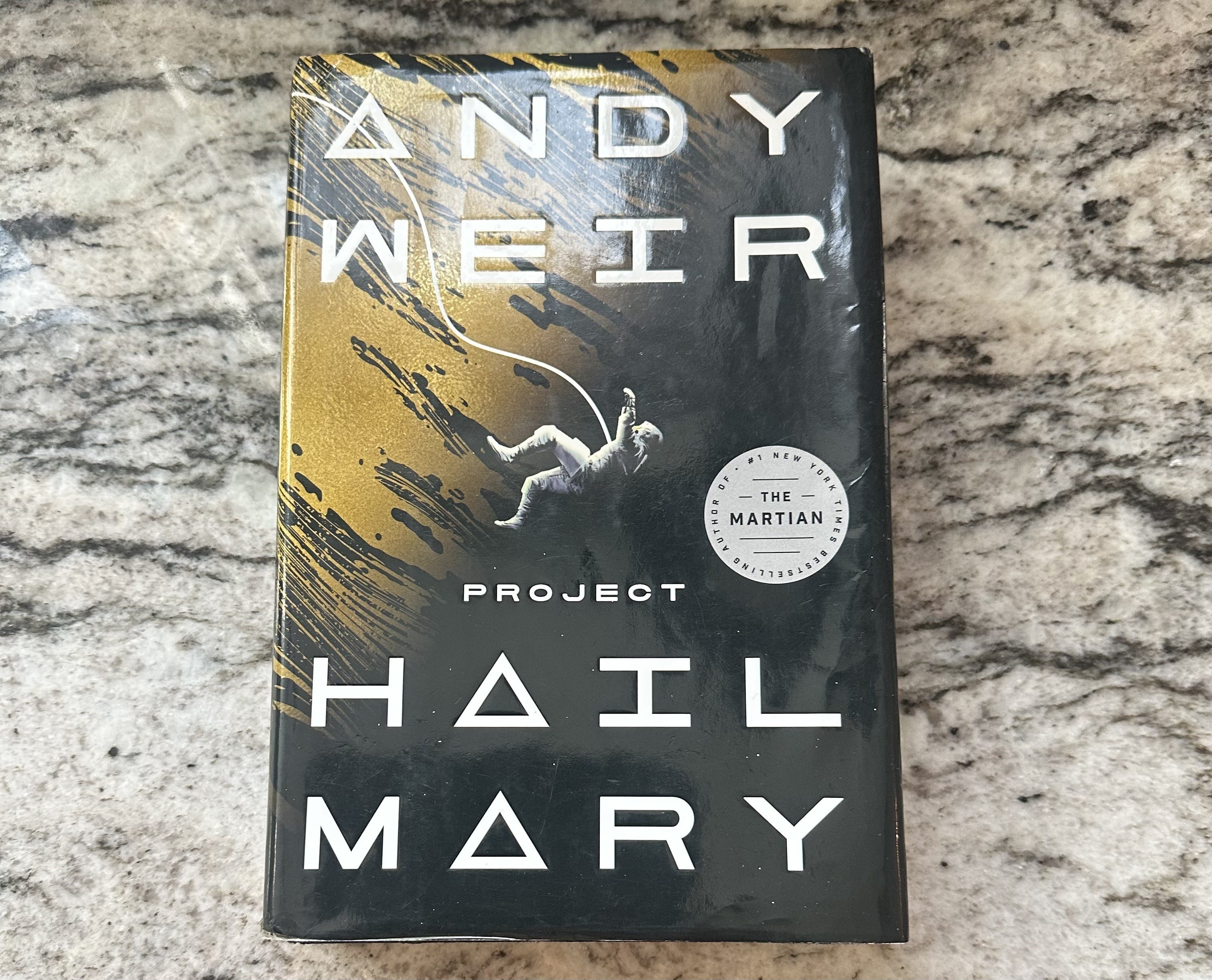
Anonymous scheduled us to watch the movie upon our return, but I didn’t realize it because it wasn’t added to the calendar. Therefore, I scheduled a work event for that Sunday, so I will have to see it when it streams. This is easily one of the best books I have ever read. I’m not a huge science fiction guy, but PHM is such a delight. I sped through this book in two days as well. The themes of curiosity, determination, and unlikely friendship are the reasons we read on vacation. I don’t think I would have enjoyed this book as much if I had to read it on the commute to work because I wouldn’t get to work. I would ride the train right out to Dulles airport and then back home until it was finished. I talked about this book with a friend, and we both laughed at the idea that reading it so quickly was partly because we skipped most of the science. So keep that in mind if you aren’t well-versed in how science works, but science folks praise Weir on how real he keeps it.
Okay! I know I keep promising you another VP Ranking, and I keep failing to deliver because work keeps spilling into the week. We will see if I can finish at least one of them and have it for you on Saturday. I appreciate everyone’s patience. At least we aren’t ranking scandals!
Also, Blue is 100% healed. We celebrated by eating pizza on Saturday night.
Thanks for the continued support of Okay History. I’m grateful that you take the time to read and like the essays.
Okay,
Chris

The floating capital thing also existed in Canada, with several different places being capital until they settled on Ottawa. However, unlike the situation in D.C., Ottawa has a functioning municipal government while also being subject to the provincial laws of Ontario; there has never been a need nor a desire for it to exist as a separate territory apart from the rest of the country.
Chris, question about the wages earned by the women in the Triangle factory in 1911 - Did you really mean $3/hour in 1911 dollars, or did you mean they earned what would equate to $3/hour in today's dollars?