


I’m going through a midlife crisis. I’m about a month away from turning 50, a number that can carry some weight and baggage if you let it. There’s nothing I can do to prevent turning 50, it’s just wild that it is actually happening. I guess one good thing about feeling like I’m in a midlife crisis is that I expect to live to at least 100.
But I’m living a terrible calamity. I’m not looking to purchase a motorcycle, dye my hair, or get a divorce and head back into the dystopia that the dating world is.
No, my midlife crisis is that I now want to write a lot of fiction. There’s a strong pull to write historical fiction, and I have about three ideas in my head of short stories or novels I want to write. Turning 50 means the public will get more of my thoughts, opinions, and creativity.
Perhaps I should think about buying a Harley.
But before I do, here’s an idea of a story that I want to share.
Our Hero
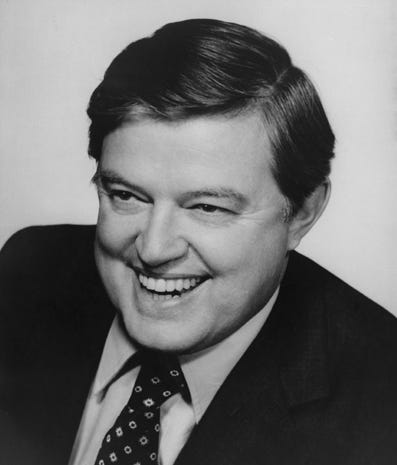
Frank Church is a Democratic senator from the state of Idaho. He is quite liberal, passing two laws to protect the environment, passing another two laws cutting off funding for the military in wars he believed were unjust. He was a two-time Stanford grad and a war hero.
He was pro-life and pro-gun. He hated communism but believed the New Deal was great for the country and fought for hospice care to be included in Medicare.
Church spent time in military intelligence, and when he got to Washington, he took on the NSA, CIA, IRS, and FBI and uncovered illegal activity by peeling back the curtain to reveal how all of our intelligence agencies spied on the American people.
After four consecutive terms, he ran into a wave of Republican victories at the ballot box. Church was narrowly defeated, and three years after his successor was sworn in, his law practice in Washington, DC, was off the ground and beginning to see modest success. However, he was hospitalized for pancreatic cancer and died at the age of 59.
What do you think? I think this story has promise.
Only I didn’t think of it.
Because Frank Church was a real person, and everything I wrote about him is true.
The Frank
I’m reading a book on Jimmy Carter, a part of a larger project of reading at least one book on every president1 when I came across the name Frank Church and his brief run for the Democratic presidential nomination in 1976.
I couldn’t believe there was a liberal Democratic Senator from Idaho. I don’t think much of the state of Idaho, and thanks to Mississippi, it’s not the lowest-ranking state in my mind.
But Frank Church feels like a character conjured out of thin air by a writer in the middle of a midlife crisis who writes a mediocre history blog.
The Frank Church-River of No Return Wilderness is the largest contiguous wilderness in the continental United States. The “No Return” part of its name comes from the challenging whitewater rapids of the Salmon River that cut through steep canyons and dense pine forests covering the 2.3 million acres of land. It sits right in the middle of the state, about 190 miles northeast of the capital in Boise. To the locals, it’s simply known as The Frank.2
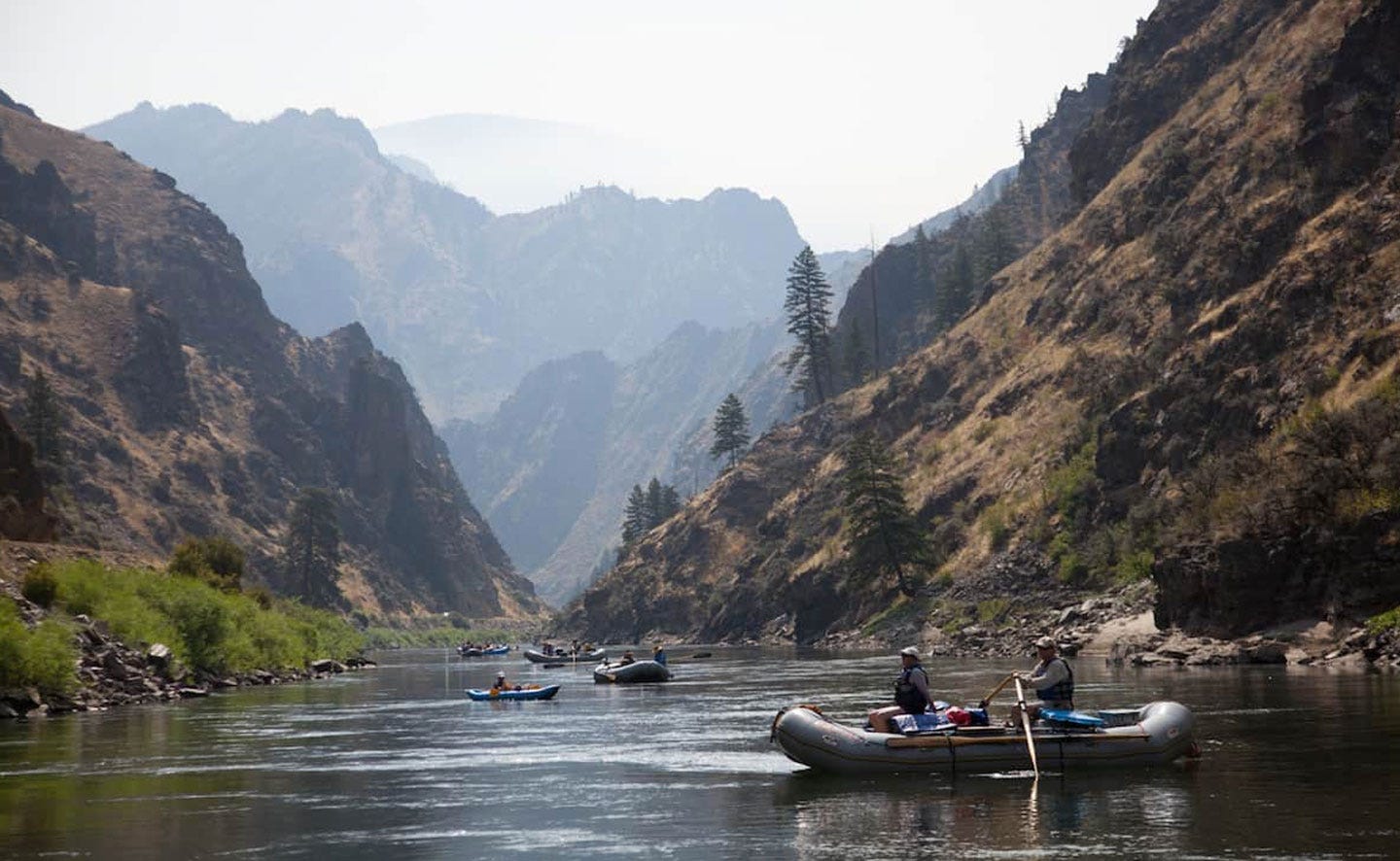
It was established in 1980, the final year of Frank Church’s legislative career, and the loss of a leader we could only imagine in our dreams.
Frank Church was born over 100 years ago in Boise, Idaho, on July 25, 1924. He was a shy, book-smart kid whose father owned a sporting goods store and took him and his brothers fishing, hunting, and hiking. The Churches were Catholic, and Frank attended St. Joseph’s school, then went on to become the senior class president of Boise High School3 1942 graduating class.
Church would briefly attend Stanford University after winning a national speech competition in his junior year of high school, which provided him with the funds to attend such an esteemed institution of higher education.
Instead, Frank would enlist in the United States Army and serve as a military intelligence officer in the Pacific during World War II. He did so well that they placed him in the Infantry Hall of Fame at Fort Benning4, the place where he trained before being shipped out.
He was discharged in 1946 and married Bethine Clark a year later, whose father was the former governor of Idaho. The married couple then headed east, where Frank planned to attend Harvard Law School, but soon left because of the cold, which he thought caused pain in his back. In reality, it was testicular cancer, and he had surgery to remove one of his testicles. Having overcome that, he finished his law degree at Stanford Law School, then ran for the United States Senate.
Frank Church may have had one literal ball, but figuratively, he had the biggest balls of any senator who ever served. He won his seat in 1956, defeating his Republican opponent despite the fact that 60% of the state voted for President Dwight D. Eisenhower.
He won reelection in 1962 and again in 1968.
By then, Frank had become an early opponent of the Vietnam War and challenged the President and the highly rated Lyndon Johnson on the issue. When you enter the Senate at age 32 and are reelected several times in a conservative state where you’re not seen as a conservative, you continue to show your big balls when confronting a president who cut his teeth in the legislative process.
Attending Church
By the late 1960s and early 1970s, Church had narrowed his focus to ending the Vietnam War and protecting the environment. He helped pass two laws that had amendments that bore his name (Cooper-Church Amendment and Case-Church Amendment), intending to cut the funds to further US military involvement in Southeast Asia.
He sponsored the Wilderness Act and the Wild and Scenic Rivers Act. He was instrumental in the creation and protection of the No-Return River Wilderness area, which would eventually bear his name.
But Church’s biggest contribution may be his exposure of abuses by the American intelligence agencies against the American people.
Have you heard the story that the FBI spied on Martin Luther King? We only know this because Senator Frank Church led a select committee, dubbed the Church Committee, that investigated and uncovered it.
The CIA, FBI, the National Security Agency, and the IRS had spent years opening the mail of Americans, wiretapping their phones, and doing all kinds of crazy, illegal stuff that was done in secret.
In 1976, Orlando Letelier, a Chilean diplomat and outspoken critic of Chile’s dictator Augusto Piconet, was assassinated in the Sheridan Circle neighborhood in Washington, DC5, by a car bomb, and was a part of a larger campaign of knocking off left-winged dissidents that the United States indirectly financed. We only know about this because of Frank Church’s committee. We now have a permanent United States Senate Select Committee on Intelligence, thanks to one-testicle-Frank Church of Idaho.
By 1976, Frank Church ran for president and won four primary states (Idaho, Montana, Oregon, and Nebraska), securing only 4% of the vote. He ultimately supported the eventual winner and future second-tier president, Jimmy Carter.
But that support would end up costing him four years later, when Ronald Reagan and the hard right conservative movement were successful in a national campaign, and Church lost to a guy who would eventually vote against the resolution condemning South Africa’s apartheid and make national news when he invented a story that the wife of the 1988 Democratic presidential nominee burned an American flag.
Too Soon
After defeat, Church established a law firm in Washington, DC, with a focus on intelligence and environmental issues, and a long career was in sight. But cancer would return, and Frank Church wouldn’t be able to overcome its aggressiveness this time, and he passed away in his Bethesda, Maryland home on January 12, 1984. He was 59. The River of No Return Wilderness was renamed after him shortly thereafter.
The tragic ending seems unfortunately fitting for such a story of a kid who grew up in the woods, mountains, and rivers, and would go on to study law, pass laws, marry a bright and talented equal, fight for his country, then fight his country. Frank Church is the type of leader we desperately need, but for some reason, he never seems to be elected anymore.
Historian and Pulitzer Prize-winning investigative reporter James Risen published a book on the Church two years ago titled The Last Honest Man.6 I wish the subtitle read: For Now.
I hope you enjoyed this essay; it was a fun discovery for me, like these others7. This weekend should be fun, the snow arrives today, and I know this because schools are already announcing their delays!
I’ll see you on Monday. Have a great weekend, and thanks for supporting Okay History!
Instead of reading 100 books on Abraham Lincoln and Andrew Jackson.
Back in 2000, I created a website called thedake.com, which is now a shady-looking company that sells furniture in New York City.
I love the idea that the state capital had only one public high school.
Named after the Confederate General Benning, then renamed Fort Moore, then renamed Fort Benning after a different guy named Benning because our current Secretary of Defense is an alcoholic asshole.
There’s a memorial I have yet to find, mostly because I’m bad at finding stuff.
Someone, please, let Anonymous know to get this for me as a Christmas present.
Thanks, Chris. I really enjoyed learning about the Frank. I, too, wish there some modern day Franks out there to get us out of this mess we're in.