



It’s important to remember something, and this might not be a concept you are ready to agree with – while there are three branches of the federal government, they are not equal.
They are not meant to be “equal.” While they are meant to “check” each other, even the practice of “checking” doesn’t prevent other branches from carrying on as they please.
One of the fault lines in our government setup is the idea that we need to give the vice president a job. There was no strategic reason for its existence, and rather than just have this person sit around all day waiting for the president to stop functioning and carrying out presidential duties, we needed to give this guy something to do.
So the Framers, geniuses that they were, came up with a doozy of a position for the VP – presiding over the Senate. Which makes sense when you realize that the Senate shouldn’t exist either and that we can easily function without it. But we will never abolish it, since we’ve had it for 250 years. Please explain why longevity is a good idea in this regard.
The specific duties for the Vice President and the Senate are hilariously simple.
1. Keep it professional.
2. Count.
3. Vote only when it’s a tie.
The VP is your basic cat sitter who stays in your place to ensure Mr. Whiskers is alive when you return from St. Kitts.
But modern vice presidents don’t even stroll over to the Senate to do some work. Instead, they give interviews and speeches about how Joe Biden is the reason we needed to bomb Iran. They only show up when they anticipate a close vote.
Remember, the vice president’s office hasn’t always been filled, and, again, there is a strong argument that the current occupant should vacate it right now. If there is no VP, the Senate falls to the President pro tempore. But the PPT is also a senator, so the possibility of a tie vote remains, with no one to break it. God forbid if that happens. On top of that, the current President pro tempore is a man who was elected into Congress before I was born and, in less than seven years, will turn a century old.1 Longevity!
But having no job other than to break ties and give speeches about presidents not in office can lead someone to make up more duties – ones that can be easily viewed as exceeding the basic responsibilities of showing up and counting.
In our next edition of ranking the vice presidents, we examine the two who really set in motion the concept that your cat sitter has now become your financial advisor.
Let’s dig in.
48: Walter Mondale
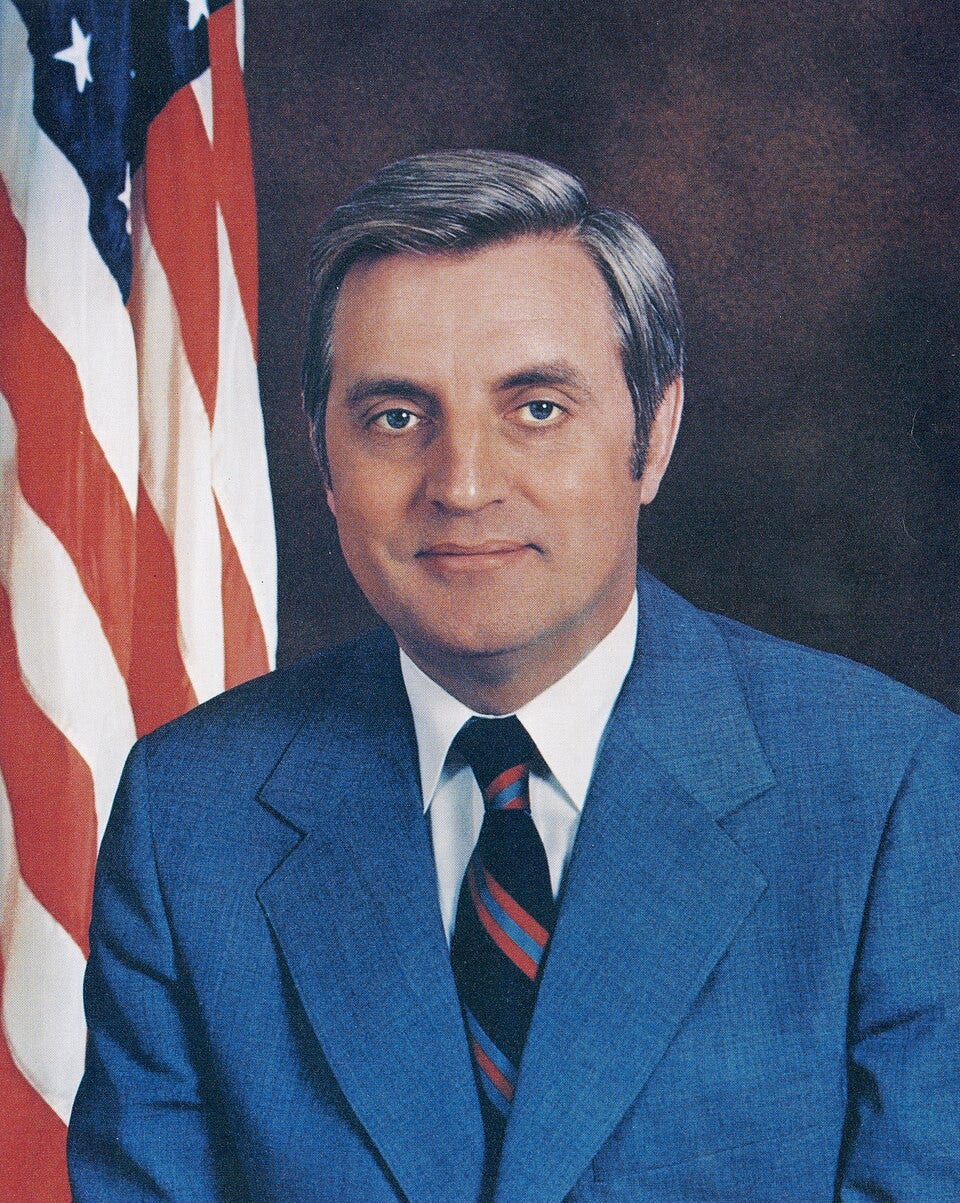
42nd Vice President
Term – January 20, 1977- January 20, 1981
Presidential Administration: Jimmy Carter’s Term (Okay History 2021 Presidential Ranking: 25)
The Good:
Mondale served as a Senator from Minnesota for 12 years, so he understood how the Senate worked. Since his boss had a terrible relationship with Congress, Mondale smoothed out any bumps that were preventing the administration from advancing its agenda. In this regard, the VP job has a clear definition.
The Bad:
The Carter administration gave Mondale an office in the White House. Why is this bad, you may ask? Because we don’t need two presidents. Trust me, I’ve worked for organizations where there are two people at the top of the chart, and neither of them was particularly good at leading anything.
Did he become president?
He did not. He did in fact run as the Democratic nominee, but was smoothed out by Ronald Reagan in the 1984 presidential election blowout.
Why did I rank him here?
Walter Mondale is considered the founder of the modern vice president. Vice presidents before him sat in the background or became enforcers. The job wasn’t intended to be another president or to influence policies. Mondale made it possible for other terrible vice presidents to exist and steer policy that the people didn’t necessarily vote for. Thanks, Fritz.
47: Richard Cheney
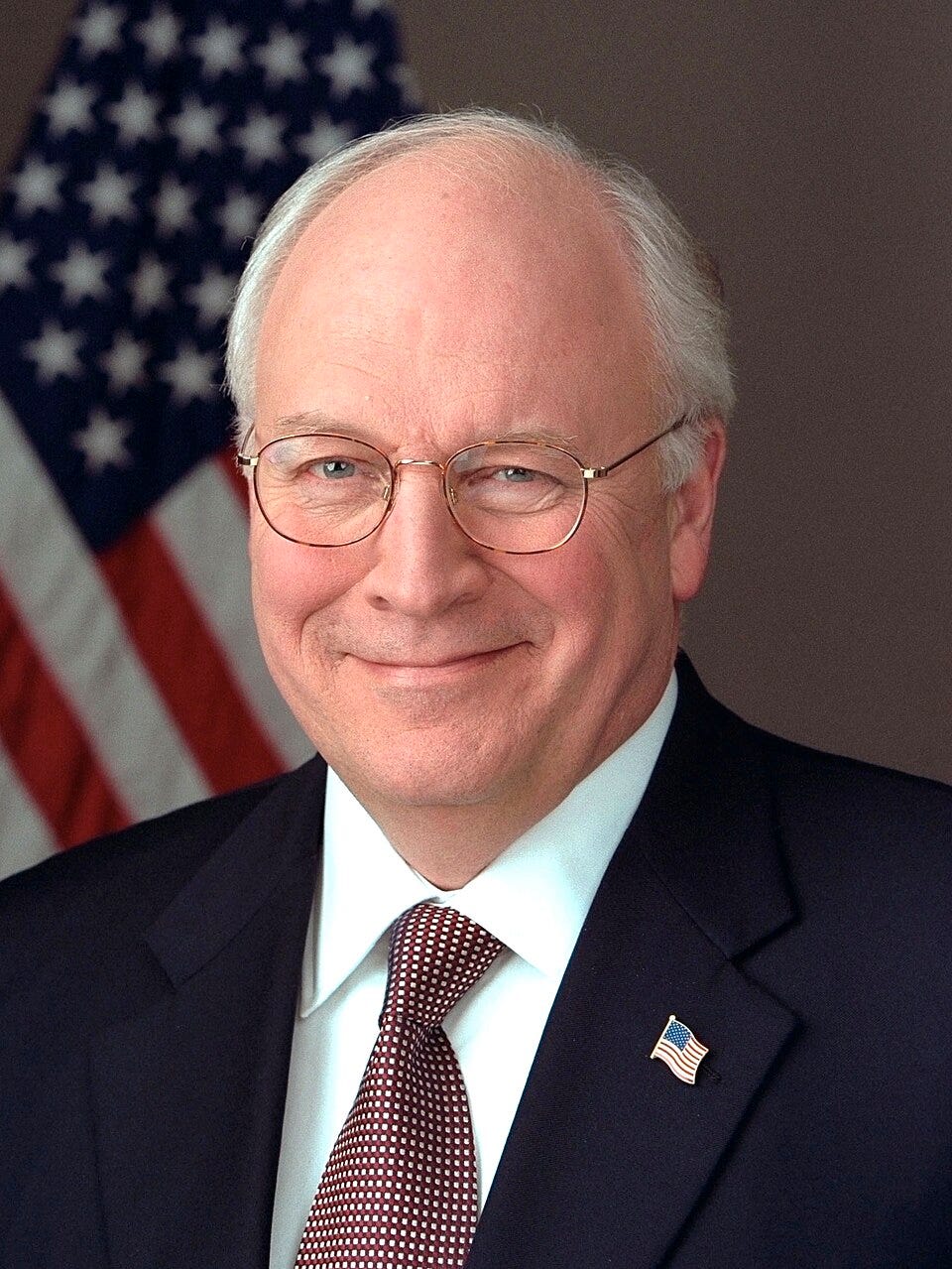
46th Vice President
Term – January 20, 2001 – January 20, 2009
Presidential Administration: George W. Bush’s two terms (Okay History 2021 Presidential Ranking: 33)
The Good:
By the time Cheney was leading the vice-presidential search in 2000, he knew where all the bodies were buried in Washington. He served under Presidents Ford, Reagan (In Congress), and Bush. He was a Congressman, a Secretary of Defense, and a CEO of an oil company. Dick Cheney knew everyone, and that skill set was a reason President George W. Bush picked him to be Number 2. I can’t think of anything else good about this man.
The Bad:
A lot of people died because Dick Cheney was in charge of the White House. There’s no way around that. Cheney had perceived real power, and beyond knowing where the bodies were buried, Cheney also helped bury a lot of them. He also shot a friend in the face. I’m pretty confident he had something like six heart attacks that never killed him, so it goes without saying he was an evil Tin Man.
Did he become president?
No. Another reason Cheney picked himself was that he could exercise more control and not have to worry about an ambitious vice president becoming a wedge between him and the president. Why run for office when you can assume the power of the office without it?
Why did I rank him here?
I firmly believe there is a direct correlation between the way Dick Cheney extended his influence and power beyond the reasonable expectations in the office and the current White House deputy chief of staff for policy, Stephen Miller. They are quite similar in style2 in that both men work for guys who were much more well-known and charismatic than they are, but in turn, less entrenched with the policies and implementation of plans than they are. This is a detrimental combination. It’s what led us to war (Cheney) and mass deportations of nonwhite people (Miller), and who knows what could happen in the future. The toothpaste is out of the tube, and no one can clean it up.
One of the most frustrating moments of the consequential 2024 presidential election that I will never be able to shake was the question posed to Vice President and Democratic nominee, Kamala Harris, on a stupid television show about what she would have done differently than her boss, President Biden.
She answered that she couldn’t think of anything, despite having staked out different positions on a variety of issues. She was trying to be loyal and not open a can of worms, which is why a VP shouldn’t run for president, because they don’t typically win. Of course, I wholeheartedly endorse asking the current guy this question and seeing where his loyalties lie.
Okay! Finally! I hope this ranking was worth the wait. Thanks for your patience. What do you think? Did I rank Dick Cheney too low? I feel like it could be too low. Let me know in the comments.
Happy spring to you, and I’ll see you on Monday with another Maundy Monday Newsletter. Enjoy the weekend!

92-year-old Chuck Grassley
Beyond the lack of hair.